Signs You May Be Experiencing Dental Pulp Problems
- Severe toothache even when not eating or chewing
- Swollen or red gums around the tooth
- Pus drainage or a gum boil on the gums
- Large cavities or severely fractured teeth
Please visit hiDental Dental Clinic as soon as possible for an examination. There is a high chance that you may have pulp inflammation and require root canal treatment.
Teeth with pulp inflammation should be treated as early as possible. Delaying treatment may cause the pain to return and become increasingly severe. In addition, bacteria inside the pulp can lead to bone loss around the affected tooth. Tooth pain can sometimes make you want to “just remove the tooth.” However, once a tooth is extracted, it will need to be replaced with an artificial tooth. Root canal treatment, on the other hand, helps preserve your natural tooth, allowing you to feel more comfortable and confident.
What Does the Root Canal Treatment Process Include?
After a comprehensive examination, dental X-rays will be taken to assess the condition before treatment and monitor progress throughout the procedure.
If the tooth is still painful, the dentist will administer local anesthesia before starting treatment. Next, the pulp chamber inside the tooth is opened using a dental drill. The infected pulp tissue is completely removed, and the dentist thoroughly cleans and disinfects the pulp chamber and root canals.
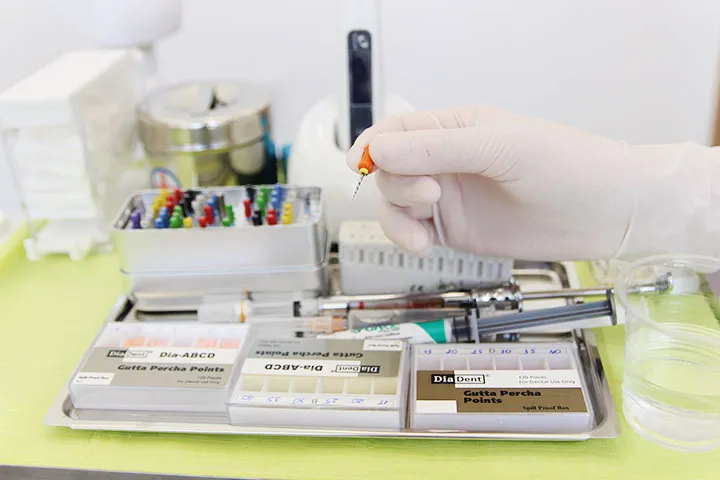
Root canal treatment instruments at hiDental Dental Clinic
During treatment sessions, if necessary, the dentist may place a rubber dam to isolate the tooth from the oral environment. Although this step may feel slightly uncomfortable, it is extremely important because it helps create a clean and dry working area while minimizing bacterial contamination.
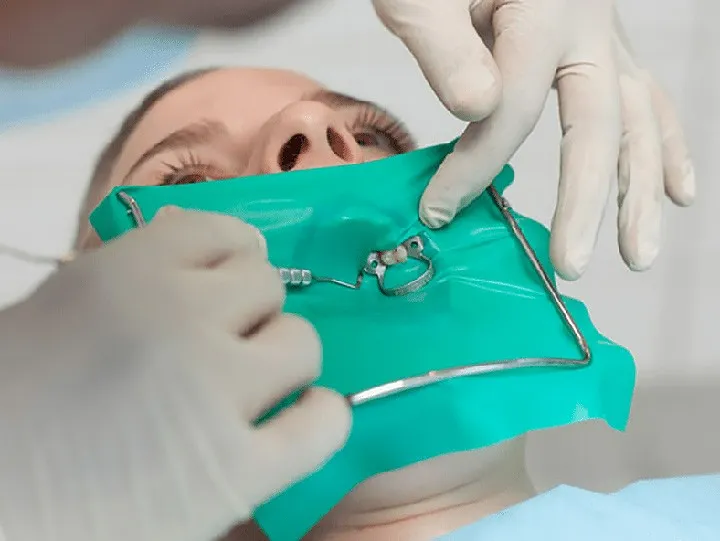
Rubber dam placement during root canal treatment (Source: Quora)
In more complex cases, the dentist may need several appointments before permanently sealing the root canals. Finally, the lost tooth structure will be restored with either a filling or a dental crown.
Important Things to Know About Root Canal Treatment:
- To achieve the best treatment results, root canal therapy may require one or multiple appointments depending on the severity of the pulp damage.
- If multiple treatment sessions are needed, you may experience some discomfort between appointments. If this happens, contact your dentist immediately so appropriate pain management can be provided.
Aftercare Tips Following Root Canal Treatment
- Avoid chewing with the treated tooth until the tooth structure has been fully restored, as the tooth may be more brittle and prone to fracture than a healthy tooth.
- Maintain thorough and careful oral hygiene. You should also use dental floss after meals to ensure effective cleaning.
- You may eat normally, but avoid chewing very hard foods on the side where the treated tooth is located.


 General Dentistry


 Tiếng Việt
 日本語
日本語