General Dentistry


 Tiếng Việt
 日本語
日本語

Is dental implant surgery necessary when a tooth is missing? Doctors warn against delaying it.
May 22, 2026
Dental crowns are a type of tooth restoration made from ceramic materials by placing a crown over the remaining tooth structure (in cases of severe decay or fractures) or by creating a bridge supported by adjacent teeth (to replace missing teeth in between).
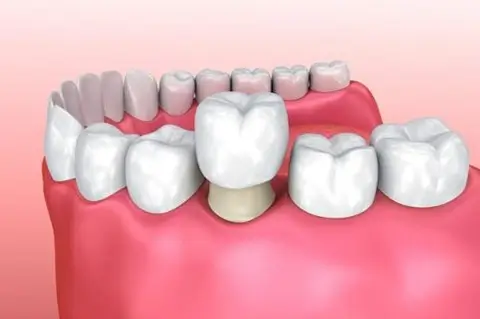
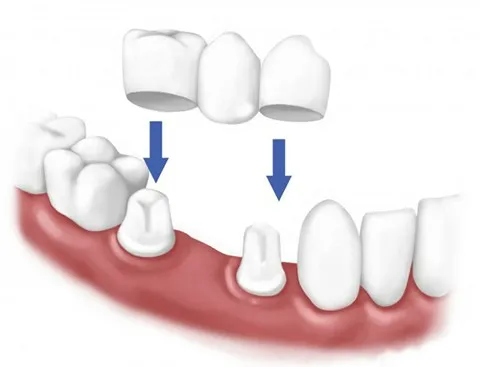
One of the greatest advantages of dental crowns is their aesthetics, with highly natural colors and shapes available in a wide variety.
However, not all patients seeking improvements in cosmetic dentistry should choose dental crowns because a significant amount of natural tooth structure may need to be removed.
Whenever possible, porcelain veneers or teeth whitening are often better options for improving tooth color while preserving more natural tooth structure.
At hiDental, our dentists always explain the advantages and disadvantages of every treatment option so you can choose the most suitable solution.
You may notice that dental crown treatment is one of the most common procedures at dental clinics.
However, what hiDental strives for is precision and meticulousness in treatment results, as well as maximum comfort throughout your experience.
That is why we pay close attention to every stage of treatment: preparing teeth only when necessary, carefully considering each patient’s preferences regarding tooth shape and color, and ensuring both our dentists and dental laboratory technicians aim for the highest possible accuracy.
Most importantly, hiDental always selects advanced, aesthetic, and durable materials for our patients.
These crowns consist of a white ceramic layer covering a metal framework. The porcelain used is premium-quality ceramic imported from Europe, while the framework is made from highly durable titanium.
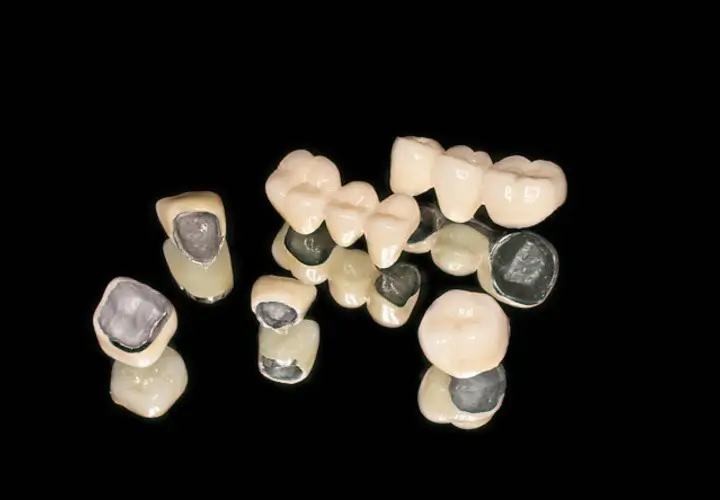
Metal-ceramic crowns (Source: Global Center Education)
These restorations are made entirely from ceramic materials, offering lifelike translucency and color that closely resemble natural teeth.
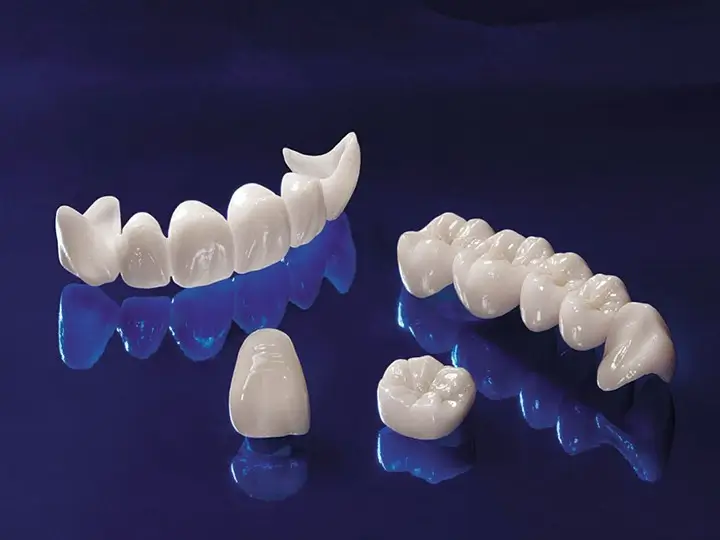
All-ceramic crowns (Source: Dental Knowledge Portal)
| Metal-Ceramic Crowns | Titanium Ceramic Crowns | 3 Years | Framework made from premium Wirobond alloy containing Chromium-Cobalt, layered with Feldspathic porcelain. |
| Biocompatible Ceramic Crowns | Cerasmart Biocompatible Crowns | 4 Years | Made from hybrid ceramic with a polymer framework infiltrated with ultra-fine nano ceramic particles. Hardness closely resembles natural enamel. |
| Cercon All-Ceramic Crowns | Cercon, CerconHT, CerconXT Crowns | 7 Years | Made entirely from zirconia ceramic by Dentsply (USA). Fabricated using CAD/CAM digital milling technology from multilayer ceramic blocks and layered with Feldspathic porcelain for natural translucency similar to tooth enamel. |
| Lithium All-Ceramic Crowns | IPS E.max Press All-Ceramic Crowns | 5 Years | Made from Lithium Disilicate ceramic by Ivoclar Vivadent (Liechtenstein, Europe). Fabricated using heat-press technology and can achieve ultra-thin restorations from 0.3–0.5mm. |
| Lithium E.max Press Veneers | Lithium E.max Press Veneers | 5 Years | Thin veneers made from Lithium Disilicate ceramic by Ivoclar Vivadent (Liechtenstein, Europe), fabricated using heat-press technology and capable of ultra-thin restorations from 0.3–0.5mm. |
| Initial LiSi Press Veneers | Initial LiSi Press Veneers | 7 Years | Veneers made from Lithium Disilicate ceramic by GC (Japan), fabricated using advanced press technology. |